What is a Wet Out ?
A wet out occurs when your rain gear stops venting perspiration because the humidity outside your clothes is higher or equal than on the inside.
During sustained rain or drizzle, your perspiration accumulates on the inside of your rain clothes and will gradually soak your inner layers. It doesn’t matter if your rain gear is made out of eVent, Gore-Tex, Nylon, Polyester, Tyvek, or some other breathable membrane, all rain gear will wet out, sooner or later.
Prepare to Get Wet
Since you'll get wet after a while, prepare to stay comfortable anyway. The key is to wear clothing that feels good both wet or dry, so you can cope with any situation.
The lightweight windproof top and pants protect you from rain and wind chill. The wicking layer next to your skin and a softshell or fleece to soak up any moisture to keep you warm. This lightweight hiking outfit doesn't hold much water even if you've gone for a swim. It lifts the moisture off your skin and lets it drip off.
Any of these layers can be worn on their own depending on the weather and what activity you enjoy.
Around camp or home you may just wear the base layer, maybe the fleece.
When swimming, wear the base layer or the windproof top and pants, or both.
Condensation
Condensate can form within seconds to a few minutes after heavy sweating starts, but the exact timing depends on humidity, temperature, and airflow around your body.
What must happen before condensation starts
- Heavy sweating loads the air right next to your skin with water vapor; once that air becomes warm and very humid, its dew point rises.
- Condensation starts as soon as that humid air contacts a surface below its dew point (for example, a cooler fabric layer or cape surface), so in a very steamy, enclosed environment this can be almost immediate.
- In sauna‑like or steam‑room conditions, tests and self‑experiments show that once high humidity is reached, visible condensation on skin and nearby surfaces can develop over the first several minutes of exposure (on the order of 5–10 minutes for strong buildup), overlapping with the onset of heavy sweating.
- In less extreme humidity (e.g., normal warm outdoor air), sweat tends to evaporate instead of condensing, so you may sweat heavily for a long time without true “condensate” forming; what you feel is mostly liquid sweat that has not evaporated.
- Very high ambient humidity (like a hot bath or steam) plus an enclosed, poorly ventilated cape mean the air under the cape reaches its dew point quickly, so condensation can appear soon after sweating ramps up.
- Cooler cape material or inner clothing layers act like a “cold glass” relative to the moist air; the greater the temperature difference, the faster droplets form and grow once sweating and evaporation have begun.
Pit Zips and Rain Ponchos
Next time you feel the urge to buy a jacket or rain cape made from the latest breathable fabric technology, remember that low tech solutions like layering, or arm pit/torso zips are more effective and cost far less.
There is a reason why ponchos with open sides and jackets with pit zips and pants with side zippers remain so popular after being on the market for so long: mechanical venting works and it is far less expensive than high-tech fabrics. Pit zips are underrated in this era of breathable, waterproof garments.
Keep Warm When Wet
Keeping warm is more important than keeping dry. If your rain gear starts to wet out and your clothes get soaked, you run the risk of getting chilled or even hypothermic in cooler weather conditions.
Wear additional base and mid-layers which may eventually get soaked, but help you keep more body heat. They will also reduce the transfer of cold from the surface of your rain clothes to your skin. Aim to keep the layer against your skin fairly dry and move moisture away from your skin.
Hike faster, eat and drink to keep your core temperature up. Dehydration can accelerate the onset of hypothermia, so keep drinking even if you don’t feel thirsty.
Warm up in a Sleeping Bag
www.wiggys.com/sleeping-bags/If you can’t stay warm, set up a shelter and get into your sleeping bag to warm up until it stops raining. Wiggy's have a sleeping bag said to keep you warm even when soaking wet. You get into the sleeping bag wearing your wet base layer clothes and it wicks moisture away while you sleep.
Summary
Under high humidity conditions a wet out is difficult to avoid.
Even ventilation gives little help.
When you get soaking wet on your adventures, maybe it's time to take a bath.
Simulate a "Wet Out" at Home
You can experimentally simulate a “wet out” feel for rain gear in a bathtub, but proceed with care to avoid damaging fabrics or tub surfaces.
Why you might want to simulate this:
- To test how a rain shell behaves when damp, such as water beading, breathability after dampness, or stiffness from moisture.
- To produce a realistic look for photography or props without exposing yourself to actual wet weather.
Gather materials
- Rain cape, anorak, or pants you want to simulate, plus a clean tub, mild detergent, and clean water.
- Optional: a spray bottle for fine mist, towels for blotting.
Wet testing setup
- Run warm (not hot) water to a shallow bath. The goal is to mimic ambient rain runoff, not submersion.
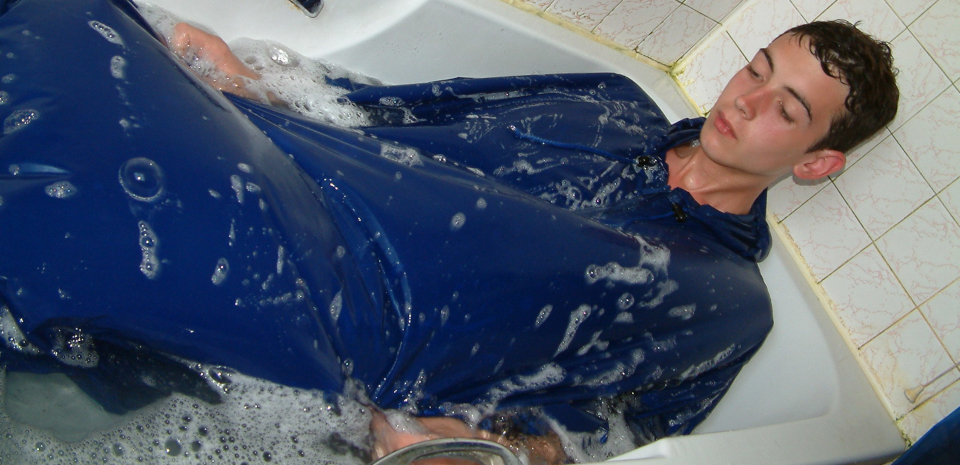
- Put your rain cape on and sit in the bath, spreading the cape out over the warm water.
- Lightly dampen the cape by spraying it with water from the spray bottle, focusing on areas that would typically get wetter in rain (shoulders, sleeves, hood, chest).
- Allow a few drops to form and drip off the fabric, mimicking droplets you’d see after a rain shower.
- Gently press or pat the fabric to simulate how rain saturates and then runs off, rather than soaking through completely.
Get Steamed Up
Steam collects inside your rain cape because warm, moist air from the bath rises, gets trapped, and then condenses on the cooler inner surface of the fabric. This creates that clammy, foggy “sauna under plastic” effect. Soon droplets form and run down the inside of your cape. That's a "wet out".
What is happening physically
- The bath heats your skin and the air around you, increasing humidity and causing more water to evaporate from the bath water and your skin.
- Warm, humid air rises and moves under the cape through openings at the neck, sides, or hem, then gets trapped because the cape limits air exchange with the room. With the hood up it traps more steam.
- The inside of the cape (and often the outer air) is cooler than the air right next to your skin, so water vapor condenses on the inner surface, forming tiny droplets that look and feel like “steam” buildup.
- The bathtub is a strong moisture source: hot water produces much more water vapor than you’d have just sitting in a dry room.
- Your body is producing sweat as you heat up, which adds even more moisture under the cape and raises relative humidity to near 100% in that little microclimate.
- Because the cape blocks airflow, the moist air cannot escape easily, so humidity and temperature under the cape climb quickly until condensation appears on any slightly cooler surface (including the fabric and your skin).
- Typical rain capes use waterproof or highly water‑resistant materials that block liquid water and usually block most airflow too, so moisture that gets inside cannot diffuse out quickly.
- If the inner face of the fabric is cooler than the air under the cape, it will be the main condensation surface, which is why you see droplets or feel your clothes getting “wet” on the inside even though no rain is coming through.
- Capes with very low breathability (no membrane or vents) behave almost like plastic sheets, making this effect stronger; more breathable fabrics or mesh vents at the back and underarms reduce the buildup by letting moist air escape.
- Evaporation:: hot bath water and warm skin continuously turn liquid water into vapor.
- Trapping:: the cape restricts convection (air movement) so moist, hot air stays near your body.
- Condensation:: when that saturated air touches a cooler surface (fabric or cooler air at openings), vapor changes back into liquid, creating fogginess and droplets.
- Re‑evaporation: as surfaces warm, those droplets can re‑evaporate, keeping under‑cape humidity very high and giving a persistent steamy feel.
- Your metabolism produces heat that warms your skin and the thin air layer next to it, raising its temperature.
- As skin warms, sweat and “insensible” moisture (always-evaporating water from skin) evaporate more quickly, loading the air under the cape with water vapor.
- The warmer that trapped air becomes, the more vapor it can hold before reaching its dew point, so body heat allows a high humidity microclimate to form under the cape.
- Condensation happens when that warm, humid air touches a surface that is cooler than its dew point, such as the inner surface of the cape or a cooler patch of skin or clothing.
- If the cape material is impermeable or low‑permeability, the vapor cannot easily escape, so vapor continues to build until it must condense as droplets on the inner surface.
- The droplets you see are the result of body‑generated heat and moisture being transported outwards, then dumping latent heat as vapor turns back into liquid on the cooler surface.
- As you get hotter, your body increases sweating and skin blood flow to dump more heat, which raises both temperature and humidity under the cape even further.
- When vapor condenses in the clothing layer or on the cape, the released latent heat can actually increase heat transfer outward, but the trapped liquid and high humidity can make you feel clammy and hotter.
- In relatively warm conditions with impermeable gear (like plastic capes), this combination becomes stressful, because your body keeps adding heat and moisture faster than they can escape, so condensation persists and comfort drops.
- Open vents: leave gaps at the neck, sides, or hem so warm, moist air can escape and cooler air can enter.
- Lower bath temperature: slightly cooler water produces less vapor and reduces how much you sweat.
- Use more breathable gear: capes or shells with venting panels, pit zips, or breathable membranes will create less of the “plastic sauna” effect in the same situation.